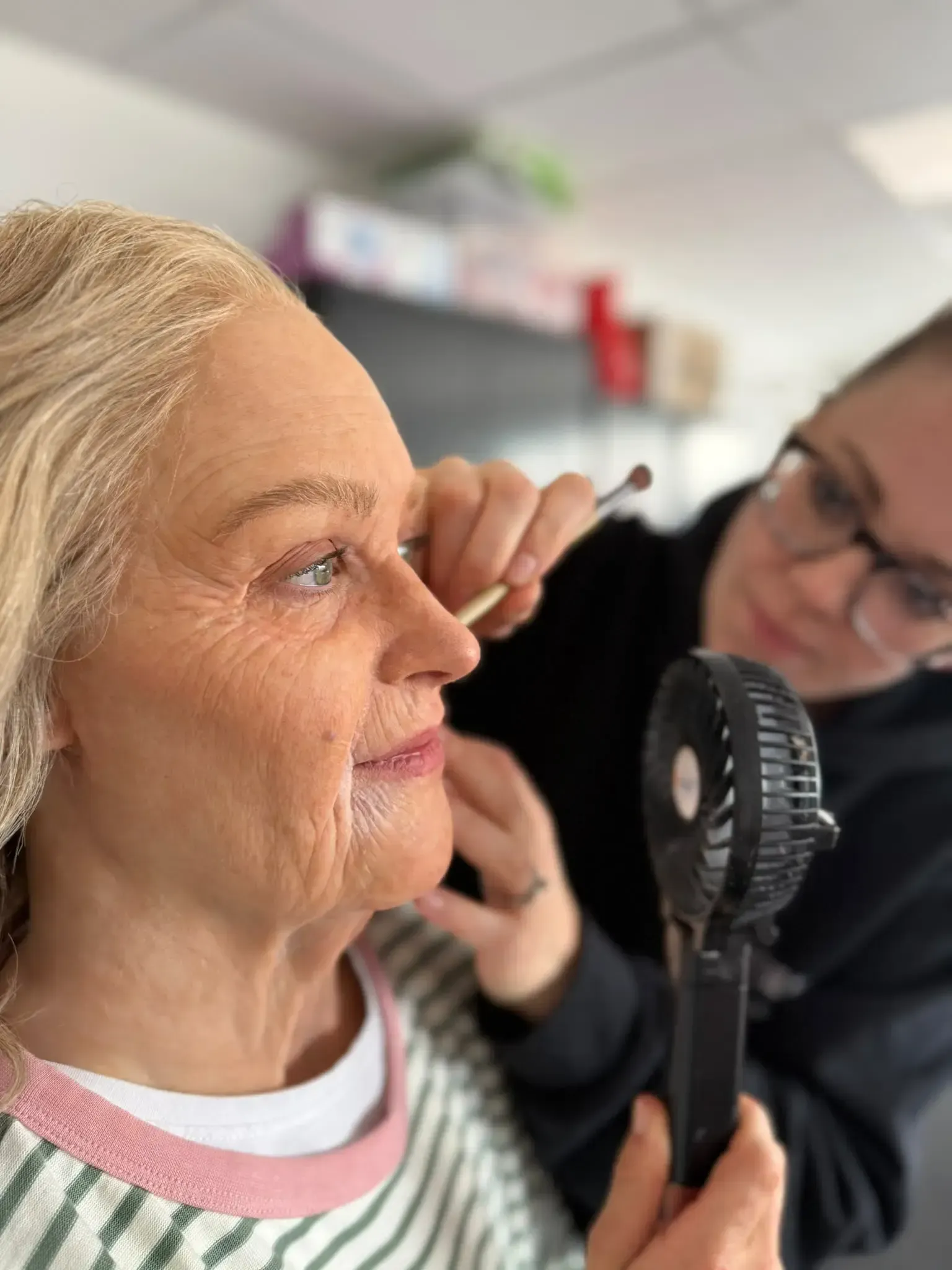
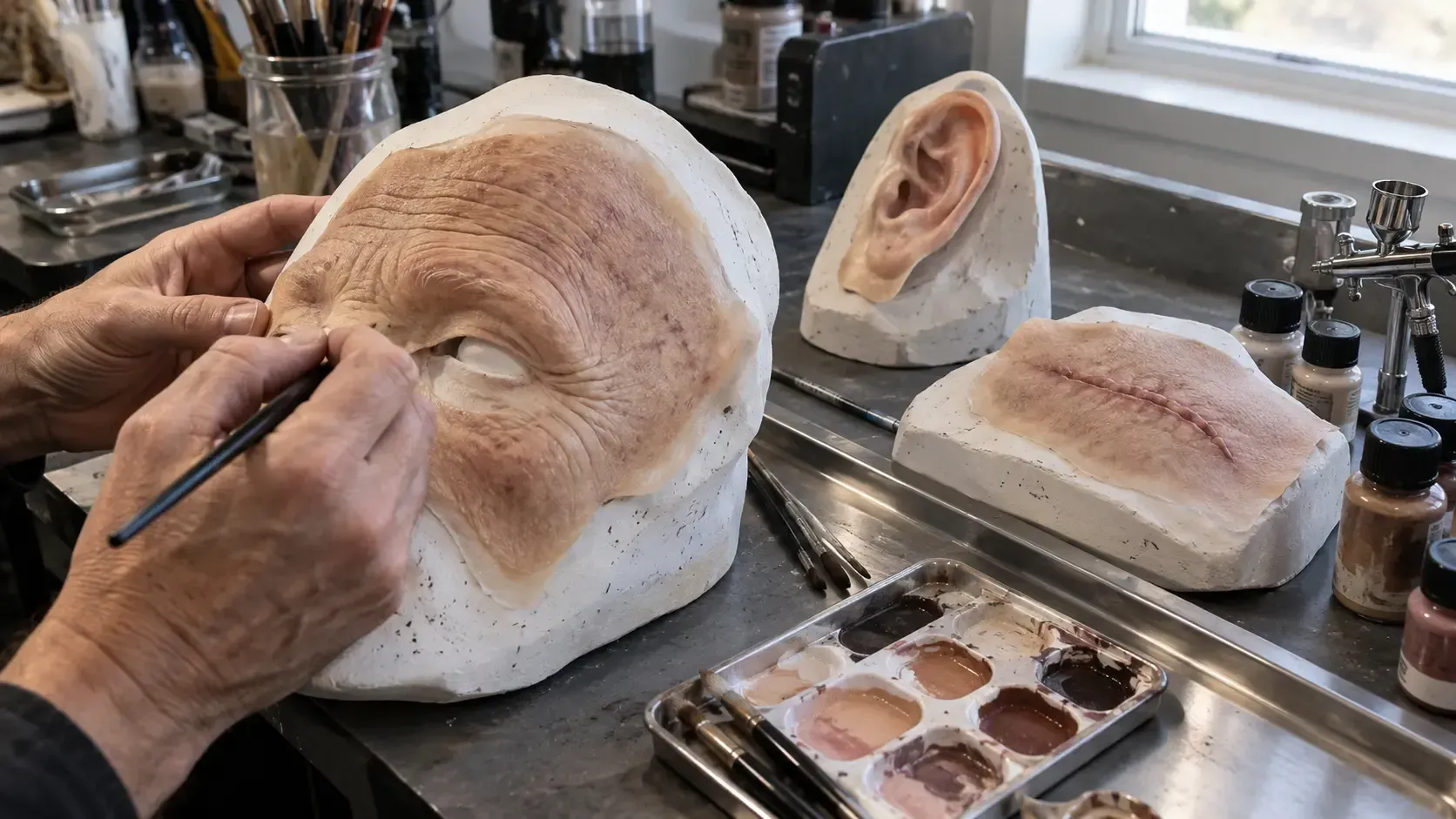
Planning Special Makeup Effects for an Independent Film

September 17, 2026

Share this article

Introduction

Independent films can achieve memorable special makeup effects without attempting to reproduce the resources of a major studio production. The key is to decide what the audience truly needs to see, involve the right artist early and protect the most important effects in the schedule and budget.


A contained, well-planned hero effect will usually serve a film better than a long list of ambitious makeups that cannot be tested, fabricated or filmed properly.

Start with the Story, Not the Technique

Before deciding that a scene needs silicone, animatronics or extensive blood effects, define what the moment must communicate. Is the audience meant to feel shock, sympathy, fear or curiosity? How long is the effect visible, and how closely will it be filmed?


These answers help the special effects makeup artist recommend where physical detail will make the greatest difference and where a simpler solution may be more effective.

Prepare a Clear Effects Breakdown

List every required effect by character and scene. Include changes over time, repeated applications, stunt interaction and any connection with costume, props or digital effects. This prevents small requirements from appearing late and changing the scope unexpectedly.


  • Effect and character name
  • Scene numbers and story timing
  • Required appearance or reference
  • Shot size and duration on screen
  • Performer and application days
  • Action, blood, costume or prop interaction
  • Continuity stage and number of repeats


A sculpture of a teal-skinned, elf-like humanoid with sparse red hair, sharp ears, and a stern expression on a stand.

Prioritise Hero Effects

Mark the effects that carry the story or will receive the closest coverage. These should receive the strongest share of design, fabrication and testing resources. Secondary effects can then be simplified, reframed or achieved using stock elements where appropriate.


This is not about lowering quality. It is about concentrating craft where the audience will feel it most.

Discuss Budget Honestly and Early

A useful budget conversation gives the artist a range within which to propose options. Costs may include design time, lifecasting, sculpture, moulds, materials, duplicate appliances, tests, application crew, travel, shoot days and consumables.


If the available budget cannot support the original brief, early discussion gives the production time to change coverage, reduce application days, simplify a transformation or focus resources on fewer effects. Discovering the gap shortly before filming leaves far fewer choices.

A detailed, green foam mask with pointed ears, textured facial features, and a beard, displayed on a workbench.

Protect Enough Lead Time

Bespoke prosthetics require several linked stages, and some cannot begin until the previous stage has been approved. Performer availability for casting and tests can also affect the timeline. Build approval time into pre-production instead of treating it as spare workshop time.

Plan Application Time into the Schedule

A complex makeup may require a performer to be called hours before principal photography. Removal and skin care also take time at the end of the day. Producers should confirm realistic timings after a test and ensure transport, holding areas, costume and catering arrangements support the earlier call.

Use Testing to Prevent Expensive Problems

A test application provides more than an approval photograph. It confirms fit, movement, colour, application duration and interaction with hair, costume and lighting. It can reveal issues while there is still time to change the design or shot plan.


Where a full test is not possible, the production and artist should agree what can be validated in advance and what risk remains for the shoot.

Decide What Must Happen On Set

Clarify who will apply the makeup, who will maintain it, how continuity will be recorded and whether repairs or replacement appliances will be available. Effects involving blood, movement or damage should be rehearsed with the relevant departments wherever possible.

Combine Practical and Digital Effects Intelligently

Independent productions can use practical makeup as the physical foundation and reserve digital work for controlled enhancements. This gives performers and lighting teams something real to work with while avoiding the need to create every detail physically.


The practical and post-production plans should be discussed together so the same problem is not paid for twice and necessary tracking, clean plates or reference photography are captured during filming.

A Focused Brief Can Still Create a Strong Result

The scale of the production does not decide whether an effect is convincing. Clear priorities, suitable materials, realistic scheduling and good collaboration make the greatest difference. An experienced team can help shape an ambitious idea into an effect the production can genuinely deliver.

A blue, metallic, humanoid robot torso with exposed wires and machinery, angled upward against a dark, industrial background.

Discuss Your Independent Film with Oracle FX

Oracle FX works with independent and studio productions on special makeup effects, prosthetics and practical character work. Send us your script, effects breakdown, dates and known budget range, and we can advise on what is achievable and where to focus your resources.

A person works on a large, textured clay sculpture of a horned dinosaur head in a studio.

Recent Posts

Artist painting hyperrealistic face sculptures in a studio, with tools and paint palettes nearby.
By Thea Mulvey September 17, 2026
See how ageing, injury and character makeup effects are designed for film and TV, with careful planning for realism, performance and continuity.
Artist sculpting a clay portrait bust at a workbench in a studio with reference photos behind her
By Thea Mulvey September 17, 2026
Explore the prosthetic makeup process for film, from the initial character brief and lifecasting to sculpture, fabrication, testing and final application.
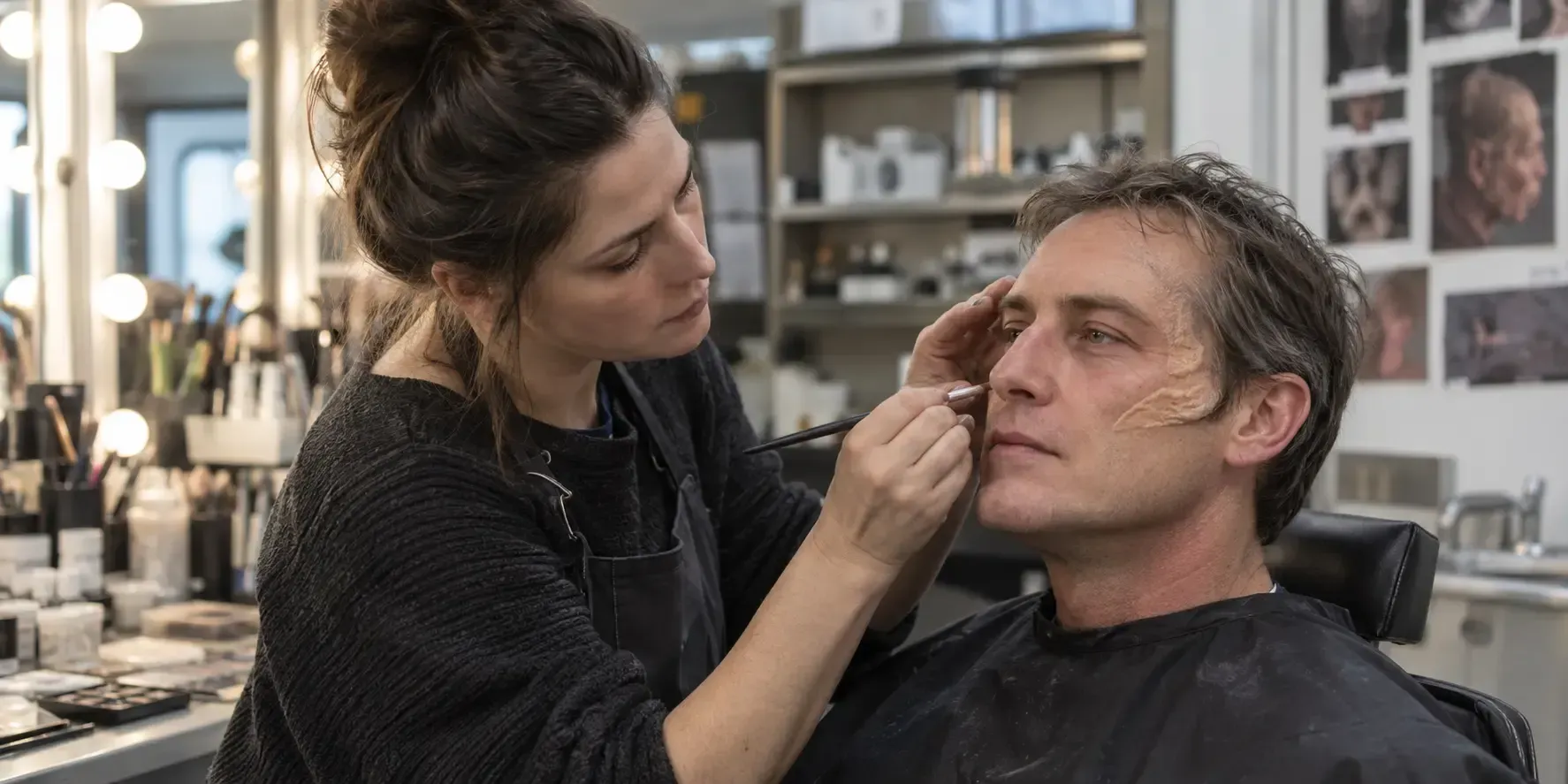
Makeup artist applying makeup to a seated man in a salon mirror station
By Thea Mulvey September 17, 2026
Hiring a special effects makeup artist? Learn what to include in your brief, when to make contact and how to choose the right support for your production.
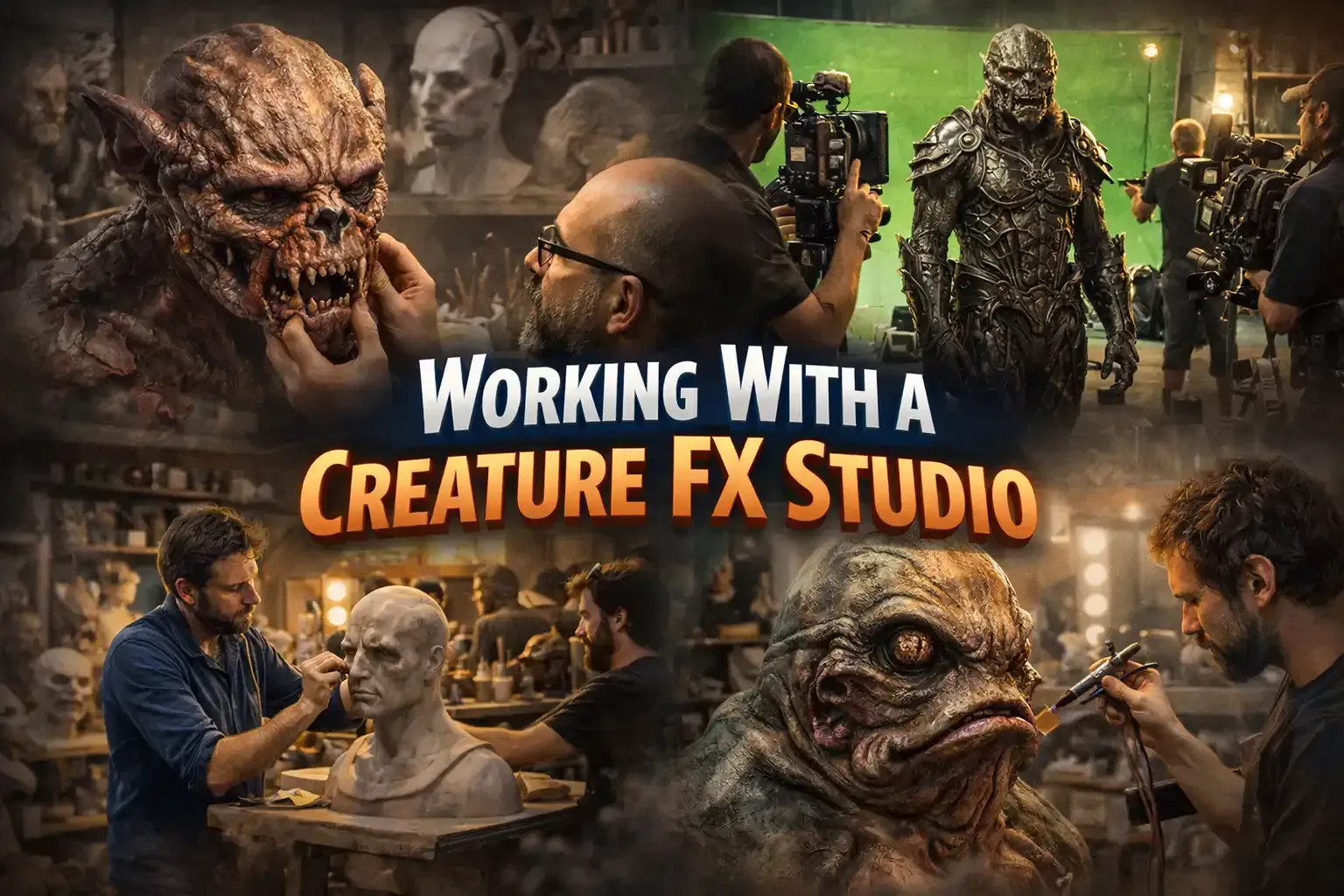
Collage of artists sculpting and painting detailed creature masks and suits in a professional effects studio.
By Thea Mulvey April 25, 2026
Learn what to expect when working with a creature effects studio. From concept to on-set delivery, understand the full production process.
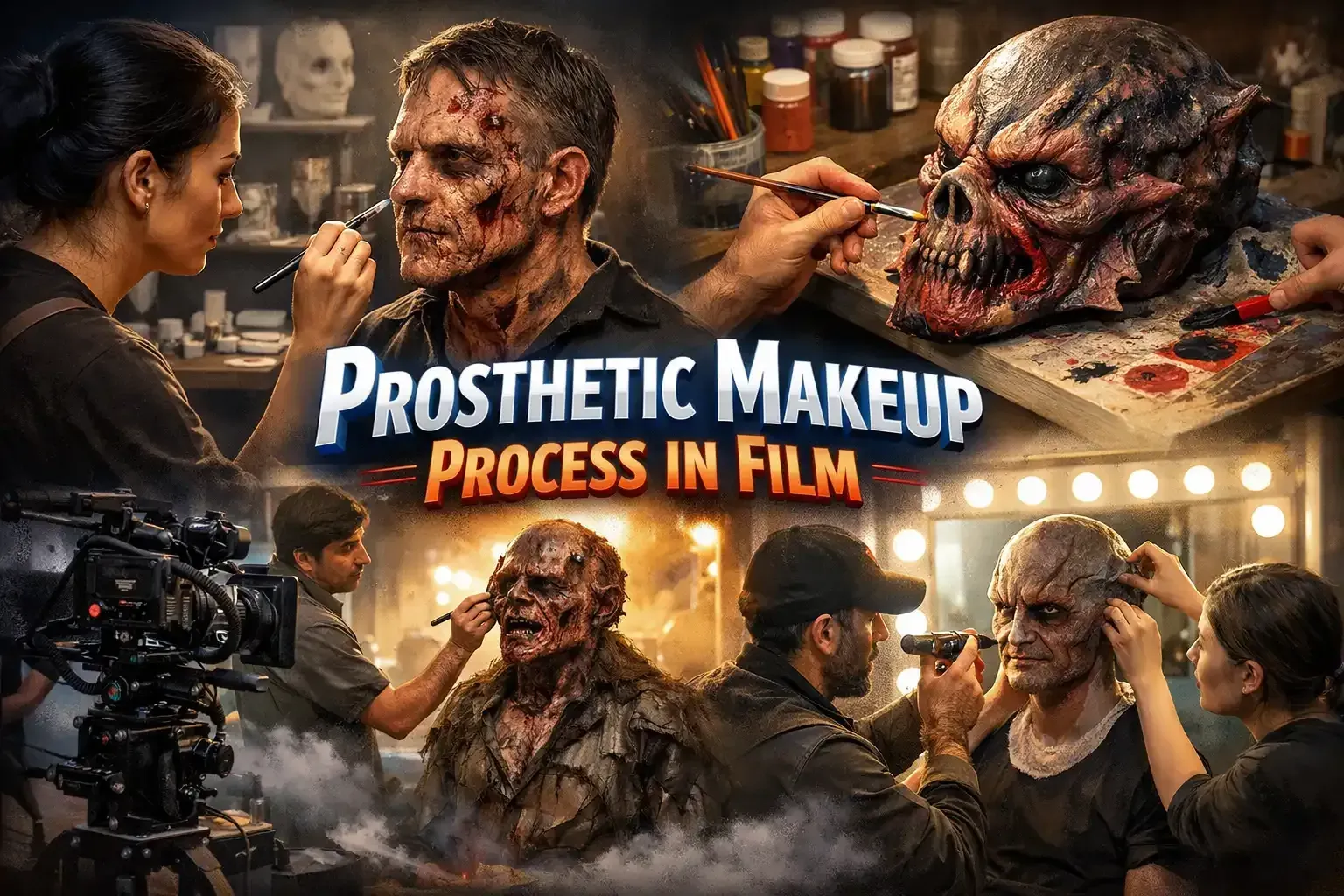
A collage shows artists applying prosthetic makeup to actors and a creature prop on a film set.
By Thea Mulvey April 18, 2026
Discover the prosthetic makeup process in film. From lifecasting to on-set application, learn how realistic transformations are created.
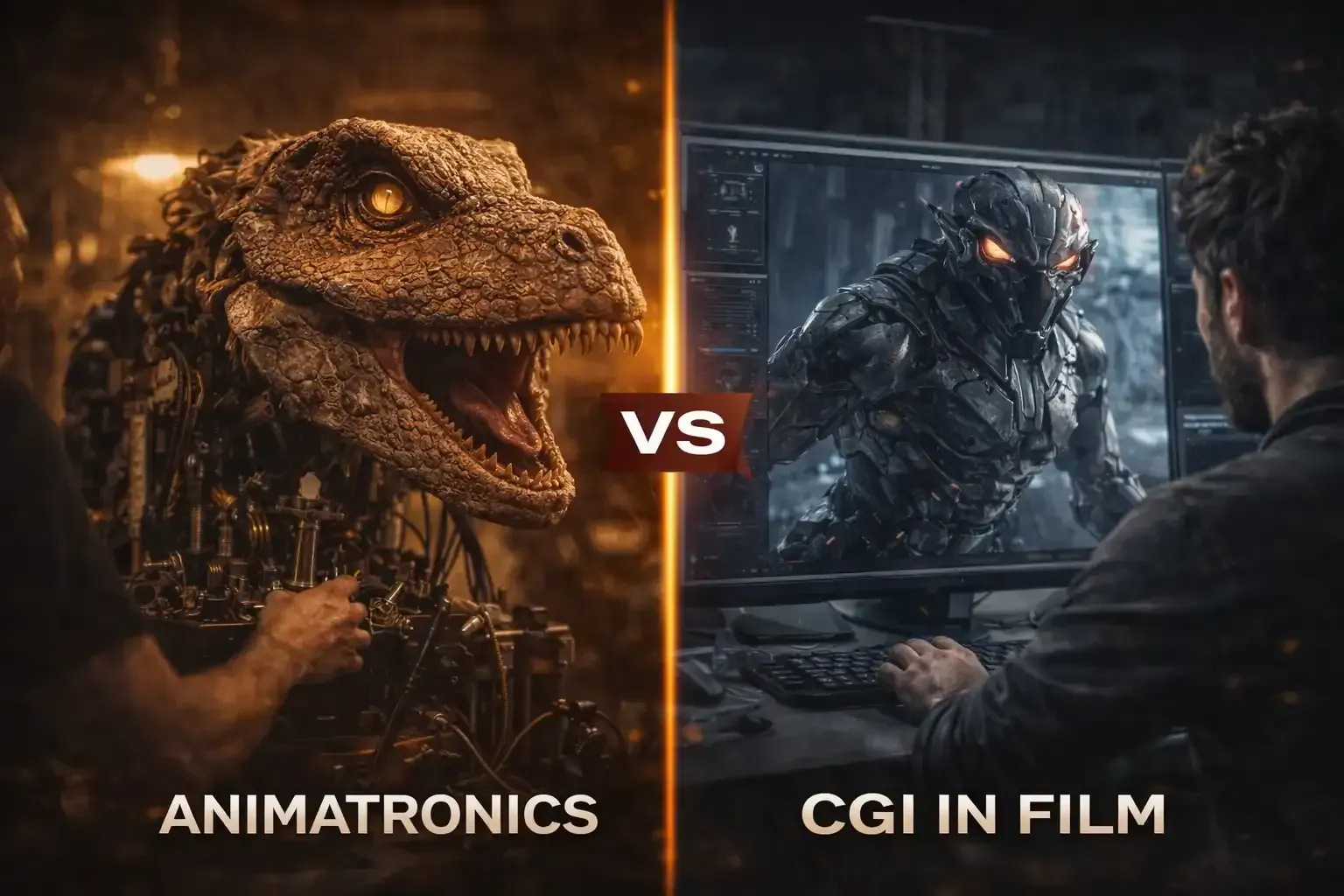
A split-screen comparison: on the left, a mechanical dinosaur model being built; on the right, digital CGI on a screen.
By Thea Mulvey April 11, 2026
Compare animatronics vs CGI in film. Discover which delivers better realism, performance and results on camera for modern productions.
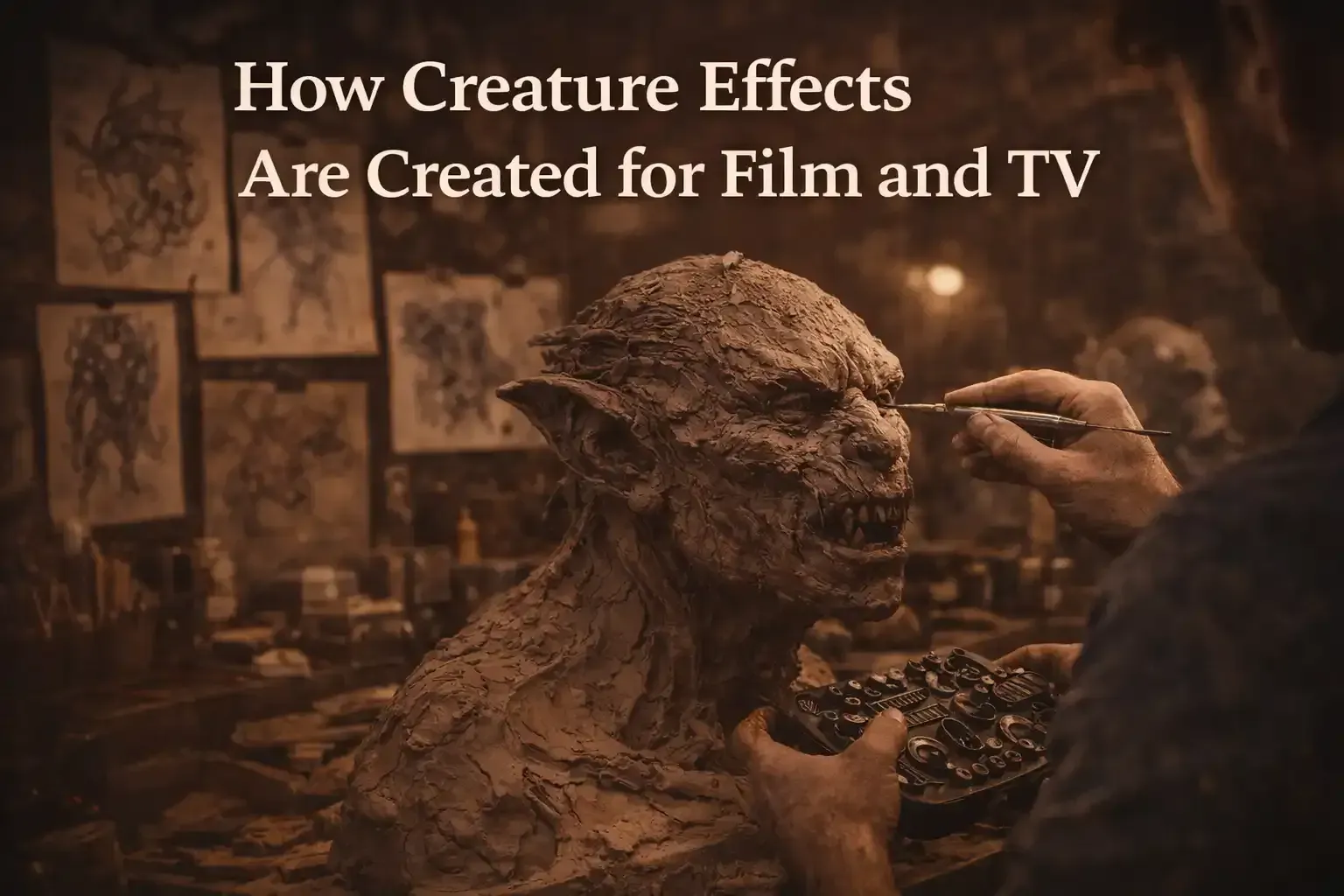
A sculptor works on a detailed clay bust of a creature in a studio filled with character design sketches.
By Thea Mulvey April 4, 2026
Learn how creature effects are created for film and TV. From concept design to on-set performance, discover the full process behind realistic creatures.
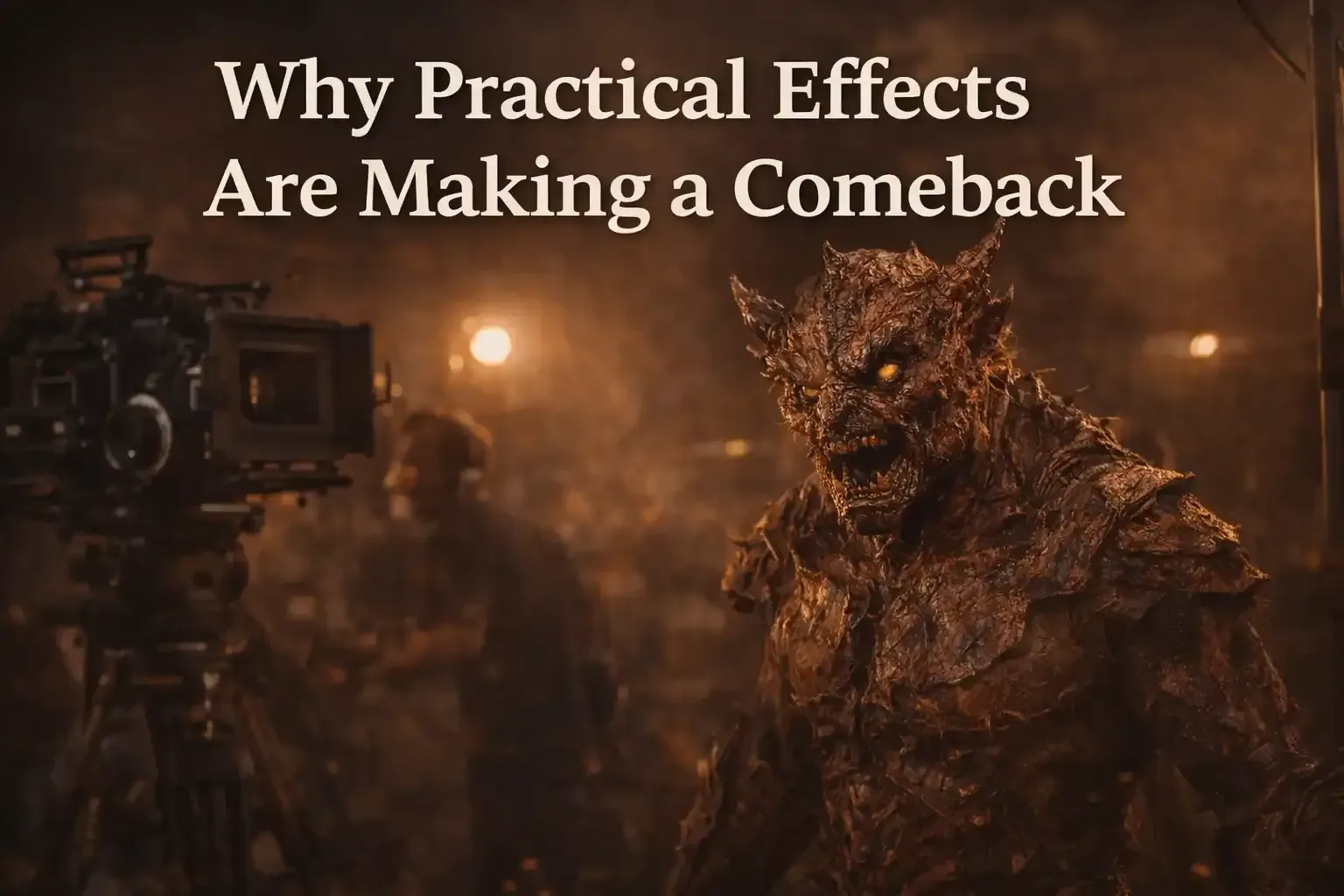
A film set with a crew member using a camera to film a textured, menacing monster, with the text
By Thea Mulvey March 27, 2026
Discover why practical effects are making a comeback in film. Explore realism, audience demand and how productions combine practical effects with CGI.
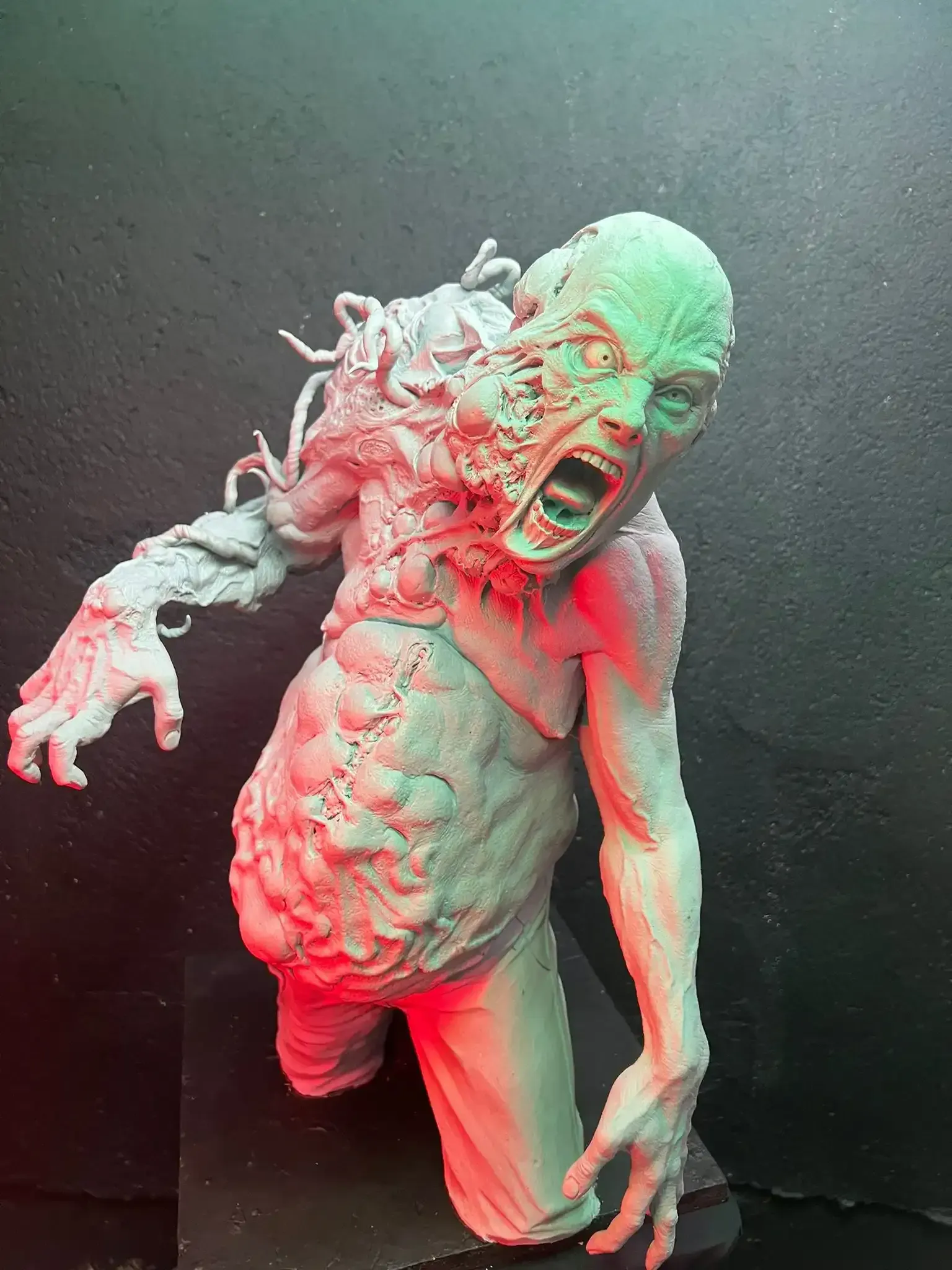
Mutated humanoid figure with gaping mouth, distorted features, and reddish-green lighting.
By Thea Mulvey March 1, 2026
Inside Professional Creature Effects for Film and Television Production
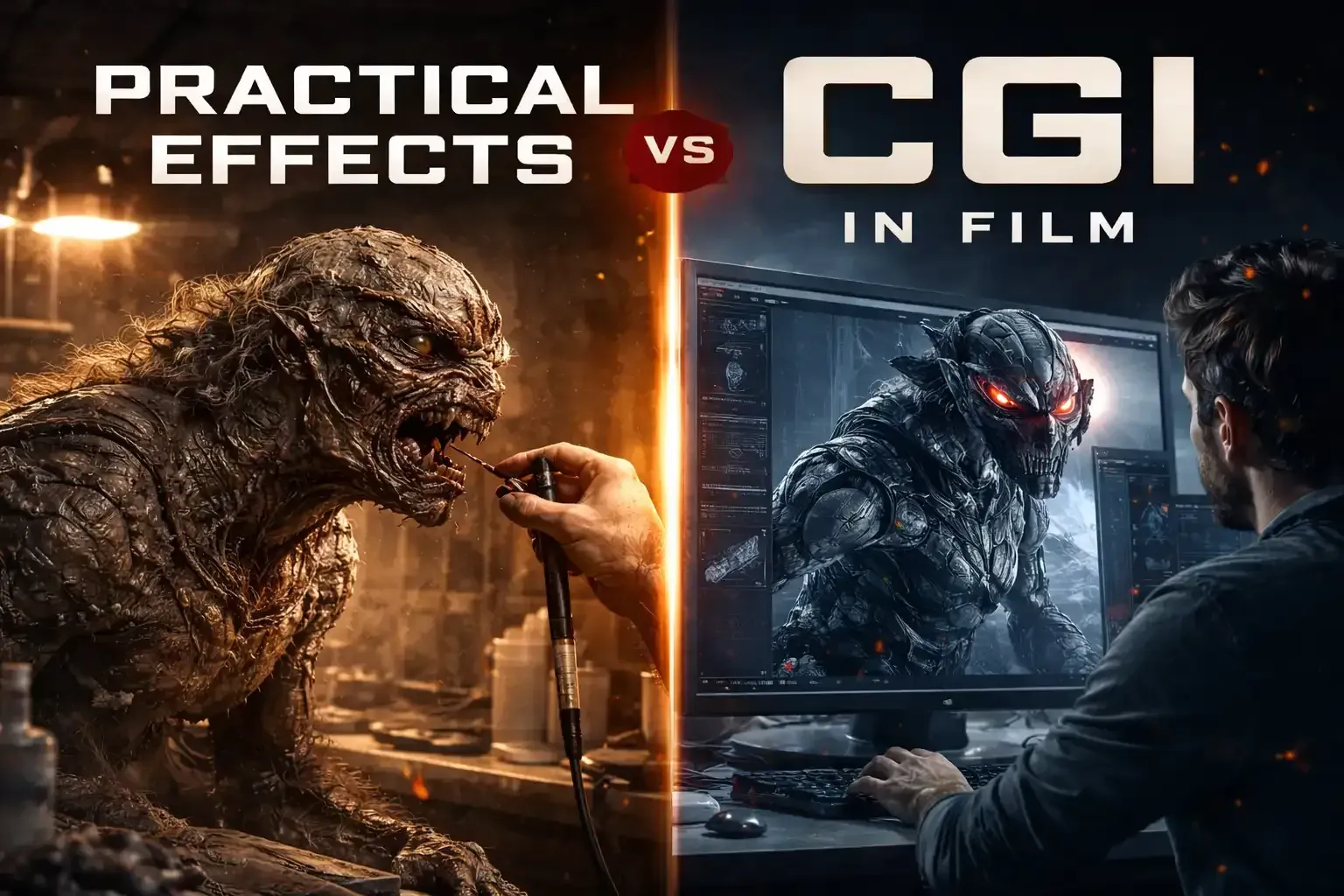
Comparison of practical effects vs. CGI in film: a creature being built vs. a digital artist working on a CGI character.
February 21, 2026
Exploring practical effects vs CGI in film production. Discover when prosthetics, creature builds and animatronics outperform digital effects.