Ageing, Injury and Character Makeup Effects for Screen

Thea Mulvey • September 17, 2026

Share this article

 Questions That Shape an Ageing Design

  • How many years must the character age?
  • Is the transformation gradual or shown in separate periods?
  • How close will the camera be?
  • How much expression and physical action is required?
  • How many applications and shoot days are planned?

Continuity Across the Story

Where an injury develops over time, the makeup team can create defined stages for swelling, bruising, healing and scarring. Approved photographs, placement guides and colour notes help reproduce each stage consistently, even when production shoots out of sequence.

Split-screen comparing animatronics, showing a mechanical dinosaur model, and CGI, featuring a digital creature on a screen.

Introduction

Special makeup effects can alter a performer subtly or transform them completely. Ageing, injuries and character changes all require different creative choices, but the strongest results share the same foundations: believable anatomy, appropriate materials, careful testing and reliable continuity.


For film and television, the effect must also suit the story and the way it will be photographed. More detail is not always better; every mark, texture and shape should have a reason to be there.

Ageing Makeup That Preserves the Performer

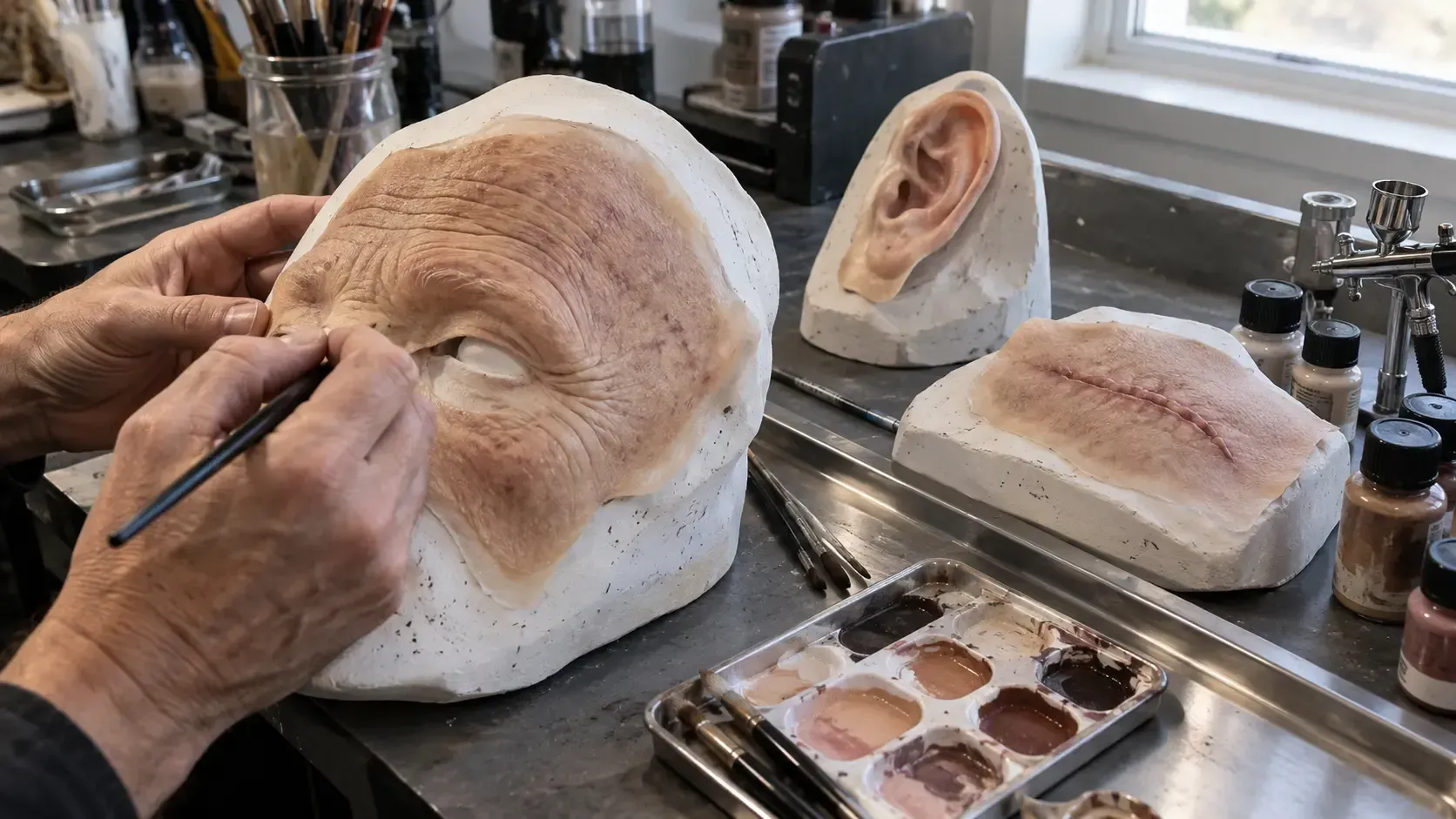
Ageing makeup is most convincing when it reflects anatomy, lifestyle, environment and the passage of time rather than simply adding wrinkles. The design may change facial structure, skin texture, pigmentation, hair and posture while retaining the performer’s identity and expression.


Depending on the required age change and camera coverage, an ageing design may combine paint techniques, hair work and prosthetic appliances. Multi-stage ageing requires a clear visual progression and detailed continuity planning so each stage feels related to the last.

 Questions That Shape an Ageing Design

  • How many years must the character age?
  • Is the transformation gradual or shown in separate periods?
  • How close will the camera be?
  • How much expression and physical action is required?
  • How many applications and shoot days are planned?

Injury, Wound and Trauma Effects

Injury makeup needs to communicate what happened, when it happened and how the body is responding. A fresh wound should not look like a healing scar, and an effect shown immediately after an event should differ from the same injury days later in the story.


Reference, anatomy and restraint are vital. The design must also take account of practical blood, costume interaction, movement, stunt requirements and the order in which scenes will be filmed.

Continuity Across the Story

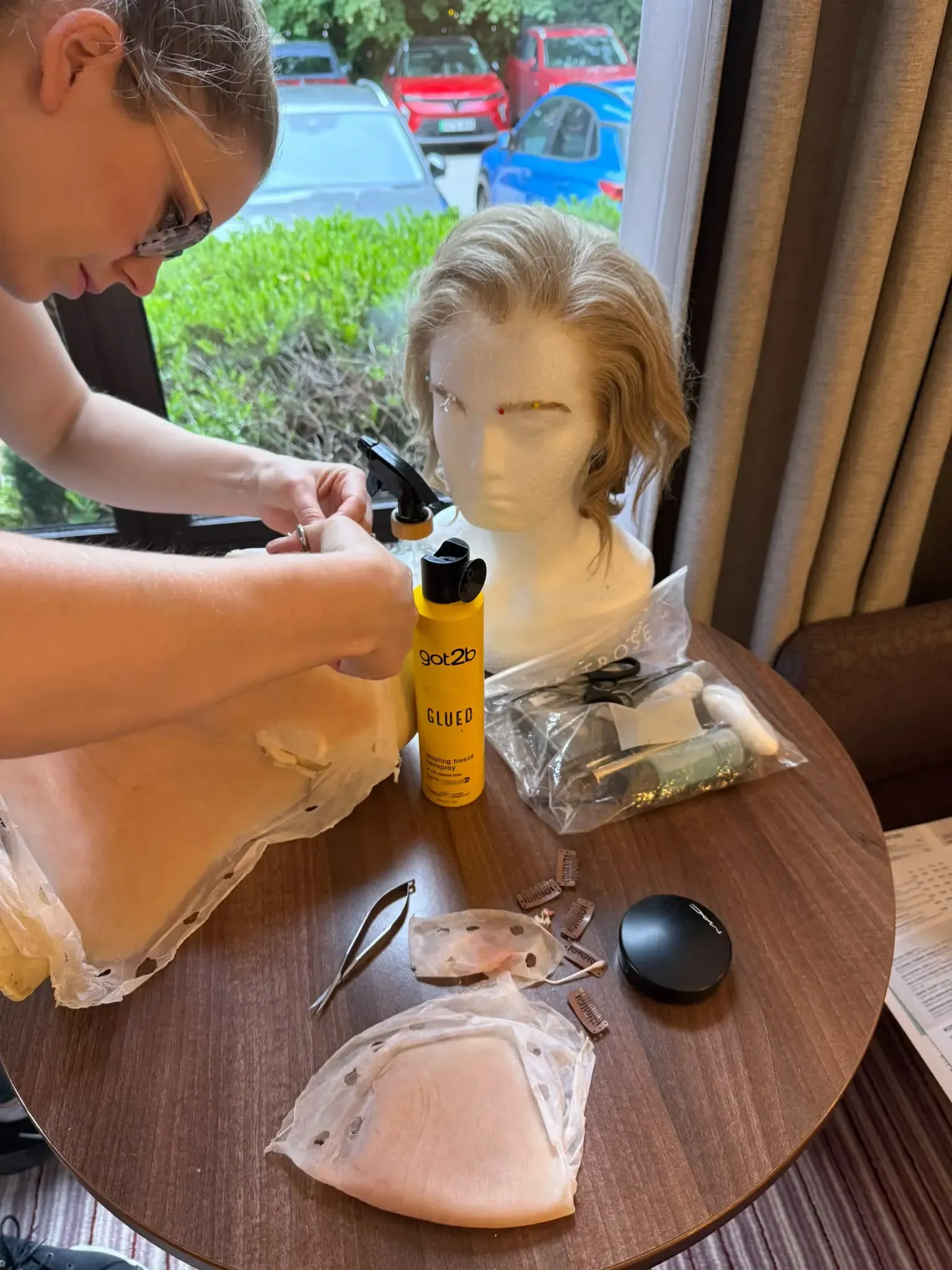
Where an injury develops over time, the makeup team can create defined stages for swelling, bruising, healing and scarring. Approved photographs, placement guides and colour notes help reproduce each stage consistently, even when production shoots out of sequence.

Character and Disguise Effects

Character effects may subtly alter a recognisable face or establish an entirely new silhouette. Changes to the nose, ears, jaw, brow, teeth, skin or body can influence how an audience reads a character before a line is spoken.


The design should support performance. Appliance edges, weight and thickness are planned so the performer retains the movement required for dialogue and emotion. Tests help identify where a bold sculpt needs refinement to work naturally on camera.

Choosing Between Makeup, Prosthetics and Digital Enhancement

Not every effect needs a full prosthetic, and not every challenge should be solved practically. Paint and hair work may be sufficient for subtle changes, while silicone or foam-latex appliances can create physical volume and texture. Digital work may then remove an edge, extend an injury or enhance an element that cannot be achieved safely in camera.


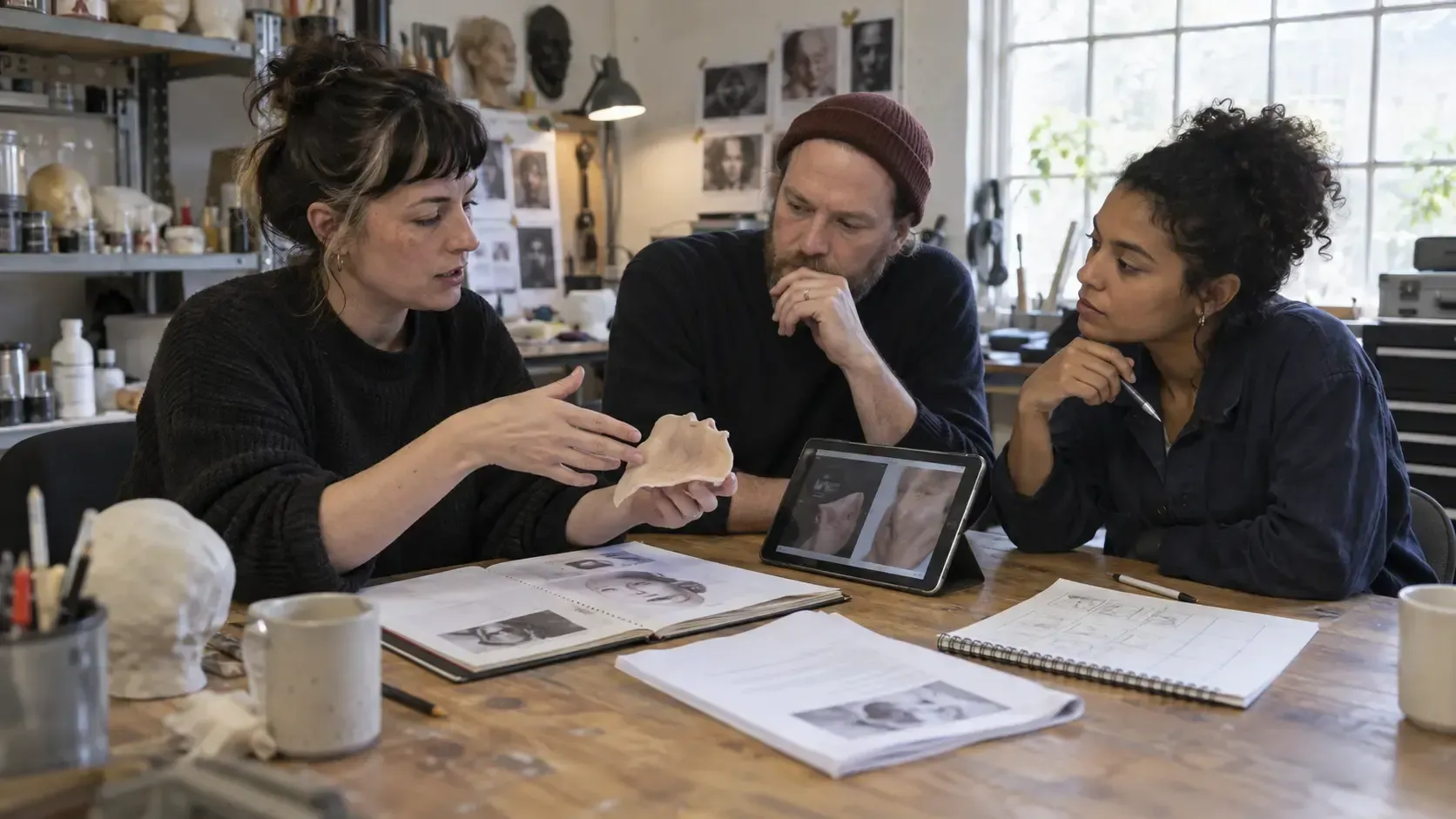
The best choice depends on performance, coverage, time and budget. Discussing the complete sequence early allows practical and digital teams to complement one another rather than duplicate work.

Testing Under Production Conditions

A makeup may look convincing in the workshop but behave differently beneath production lighting or during movement. Tests should consider the planned lens distance, lighting direction, perspiration, costume, hair, dialogue and physical action.


Testing also establishes application and removal times. These timings need to be reflected in call sheets, particularly when a principal performer requires a complex transformation before filming can begin.

A blue, metallic, humanoid robot torso with exposed wires and machinery, angled upward against a dark, industrial background.

Create Believable Character Effects with Oracle FX

Oracle FX designs and produces ageing, injury and character makeup effects for film and television. We work with production teams to develop effects that serve the story, protect performance and remain practical throughout filming.

A person works on a large, textured clay sculpture of a horned dinosaur head in a studio.

Recent Posts

Three people in a kitchen discuss notes and a tablet at a wooden table.
September 17, 2026
A practical guide to planning special makeup effects for an independent film, including priorities, budgets, lead times, testing and on-set requirements.
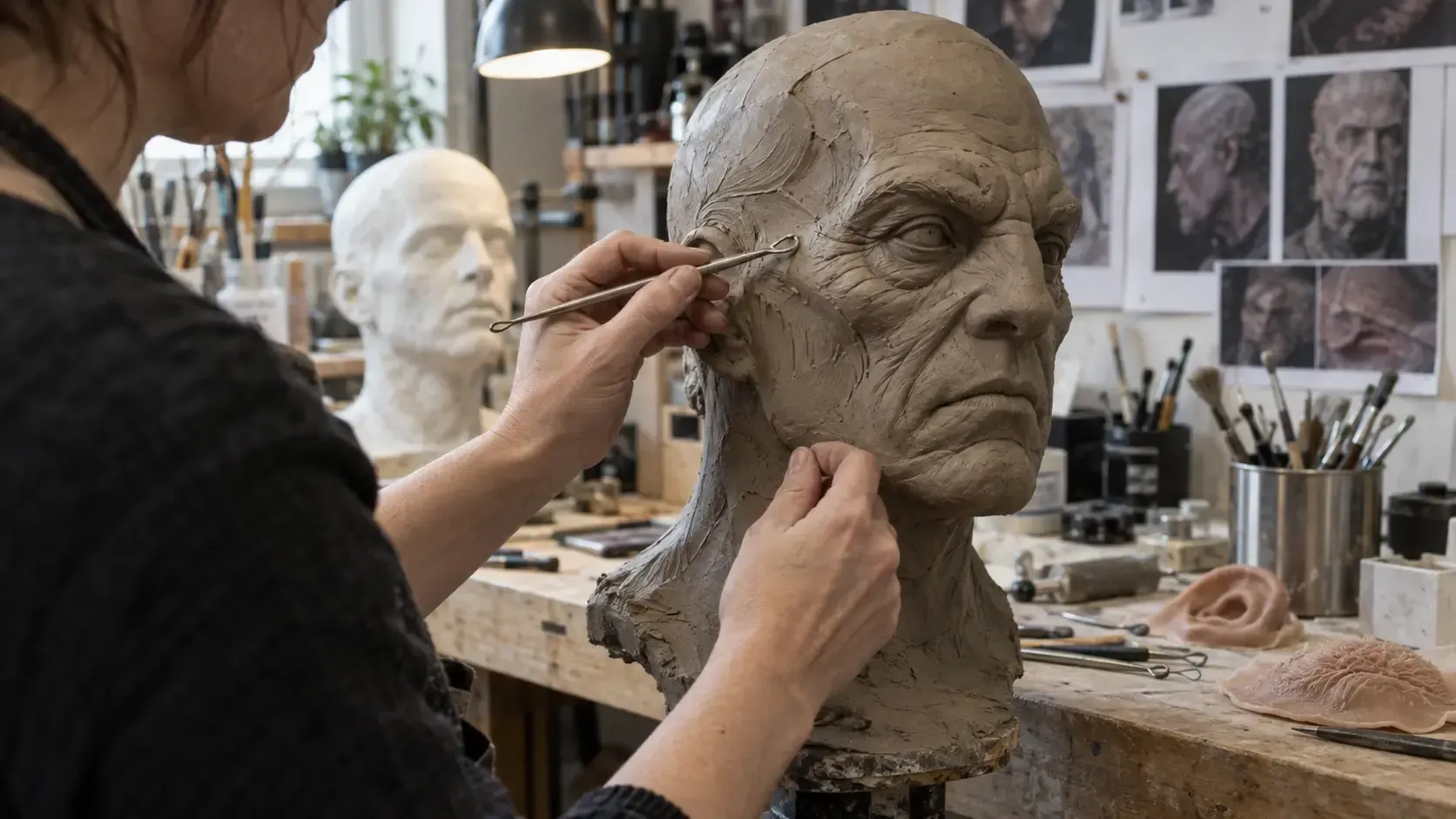
Artist sculpting a clay portrait bust at a workbench in a studio with reference photos behind her
By Thea Mulvey September 17, 2026
Explore the prosthetic makeup process for film, from the initial character brief and lifecasting to sculpture, fabrication, testing and final application.
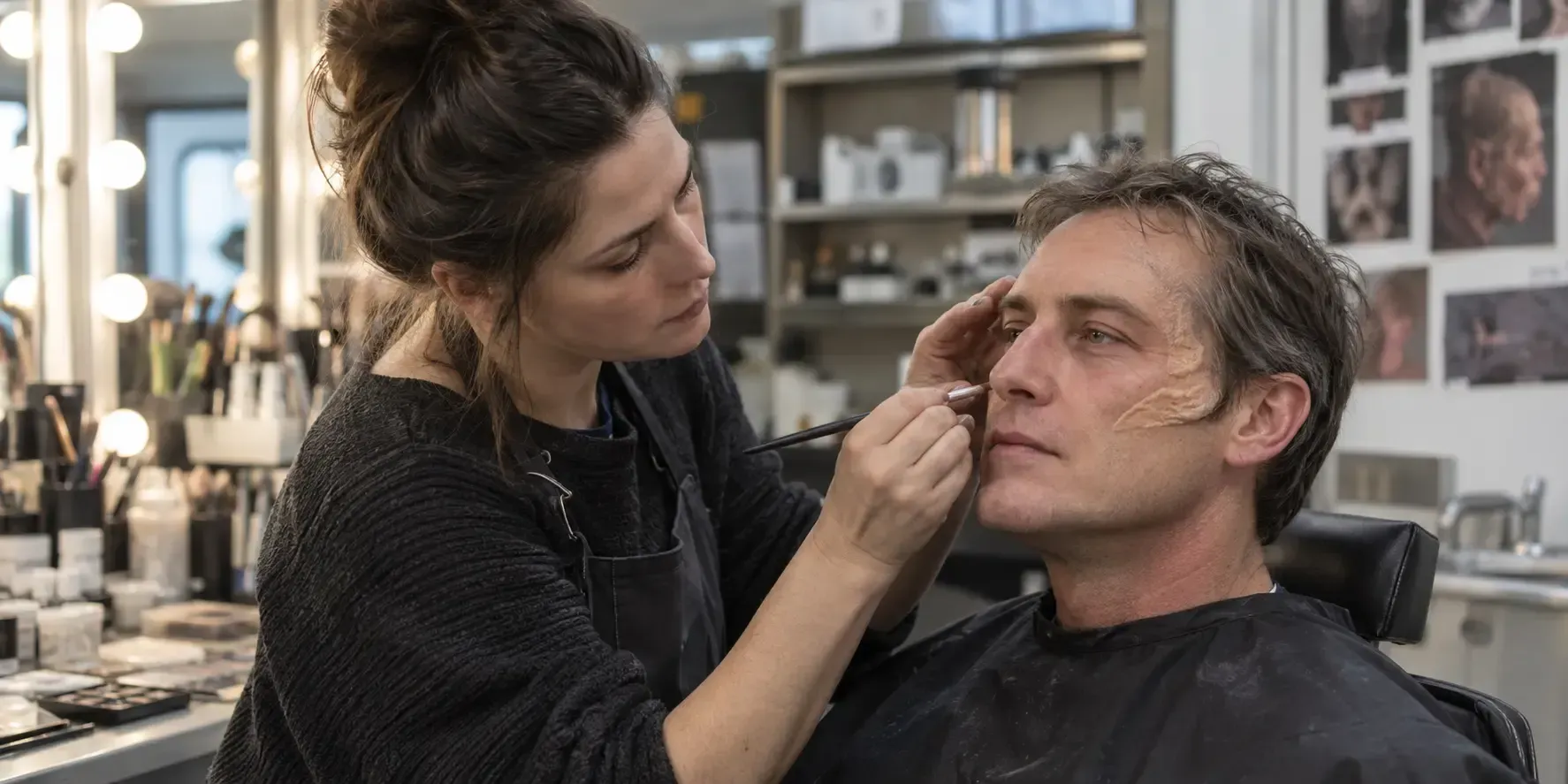
Makeup artist applying makeup to a seated man in a salon mirror station
By Thea Mulvey September 17, 2026
Hiring a special effects makeup artist? Learn what to include in your brief, when to make contact and how to choose the right support for your production.
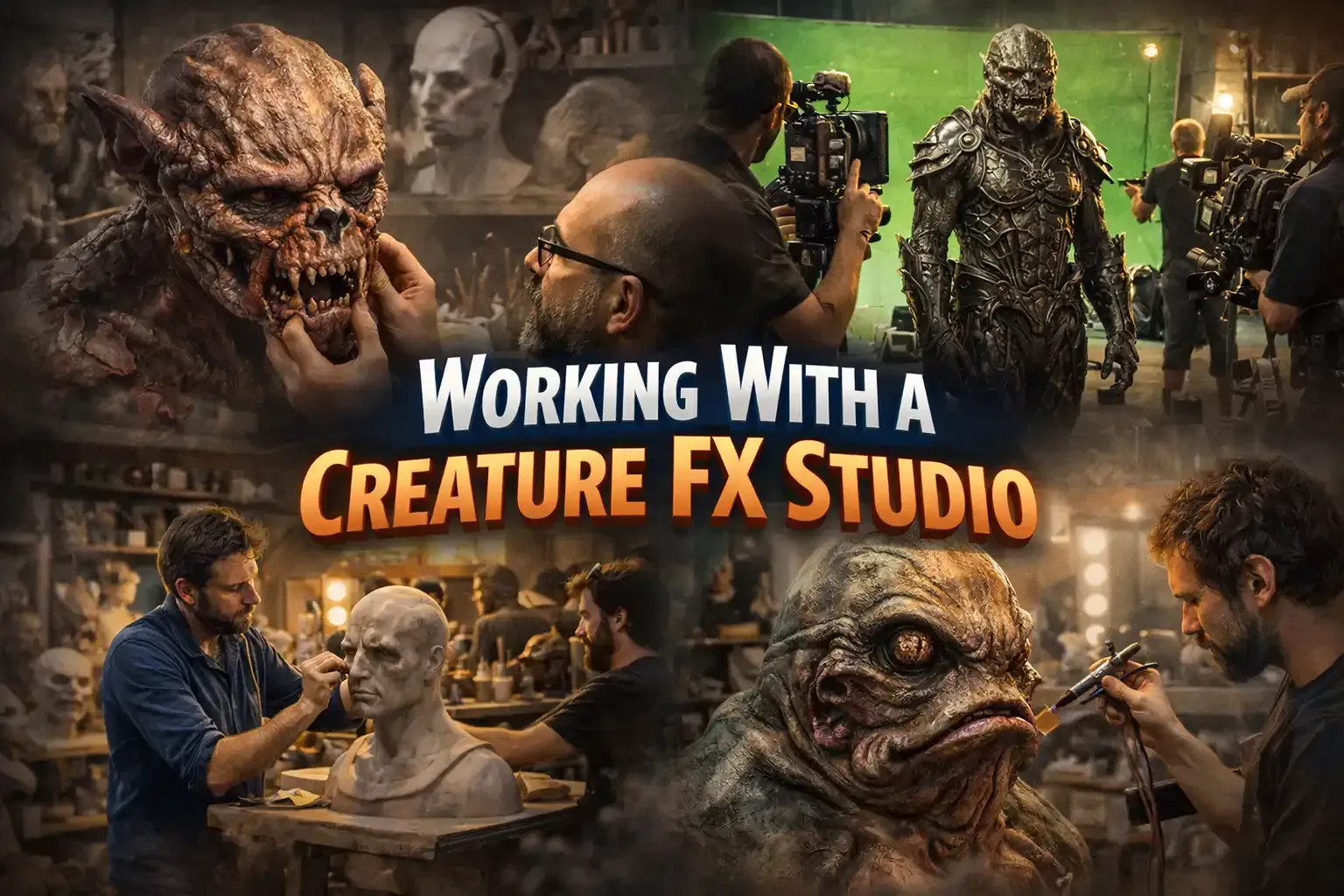
Collage of artists sculpting and painting detailed creature masks and suits in a professional effects studio.
By Thea Mulvey April 25, 2026
Learn what to expect when working with a creature effects studio. From concept to on-set delivery, understand the full production process.
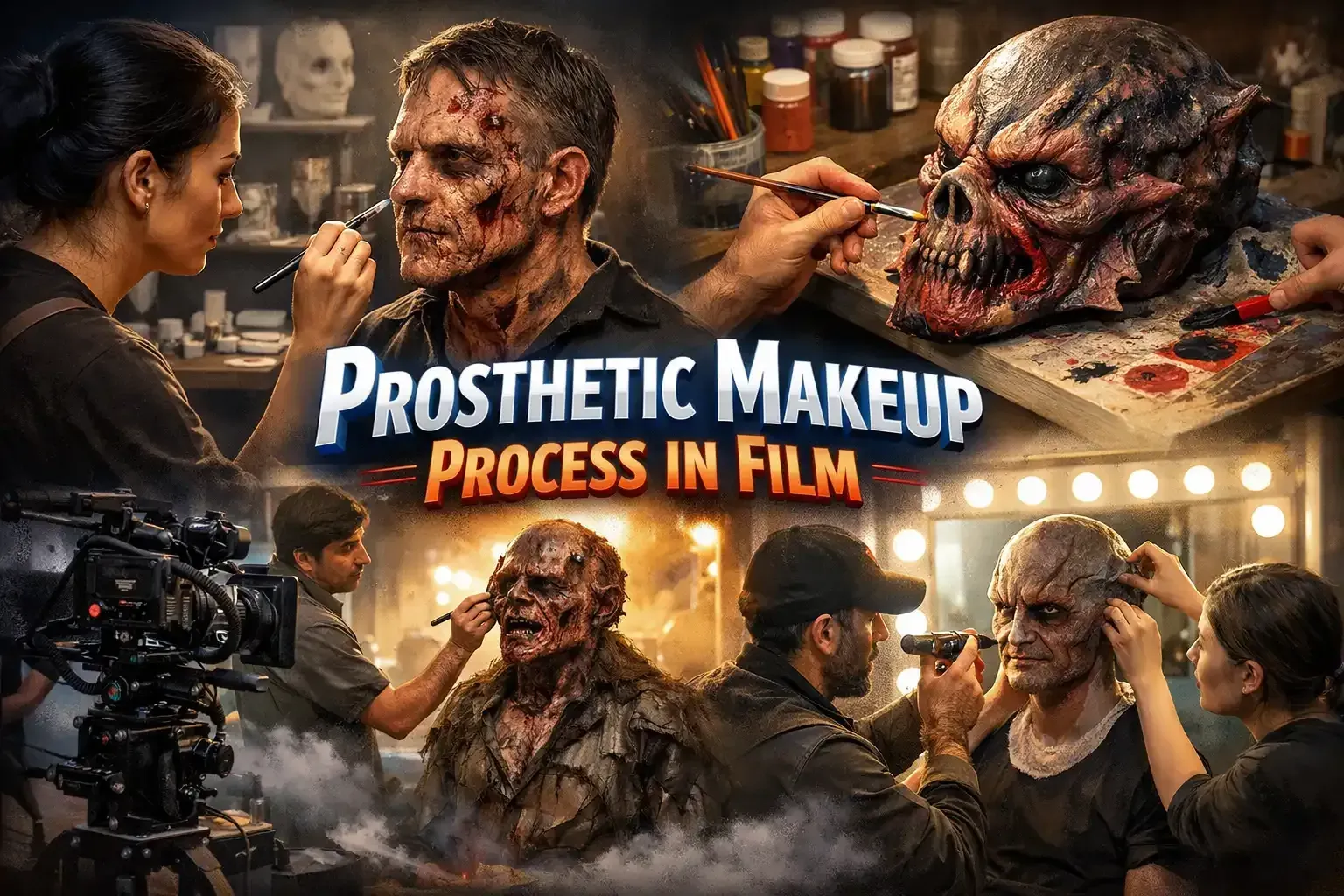
A collage shows artists applying prosthetic makeup to actors and a creature prop on a film set.
By Thea Mulvey April 18, 2026
Discover the prosthetic makeup process in film. From lifecasting to on-set application, learn how realistic transformations are created.
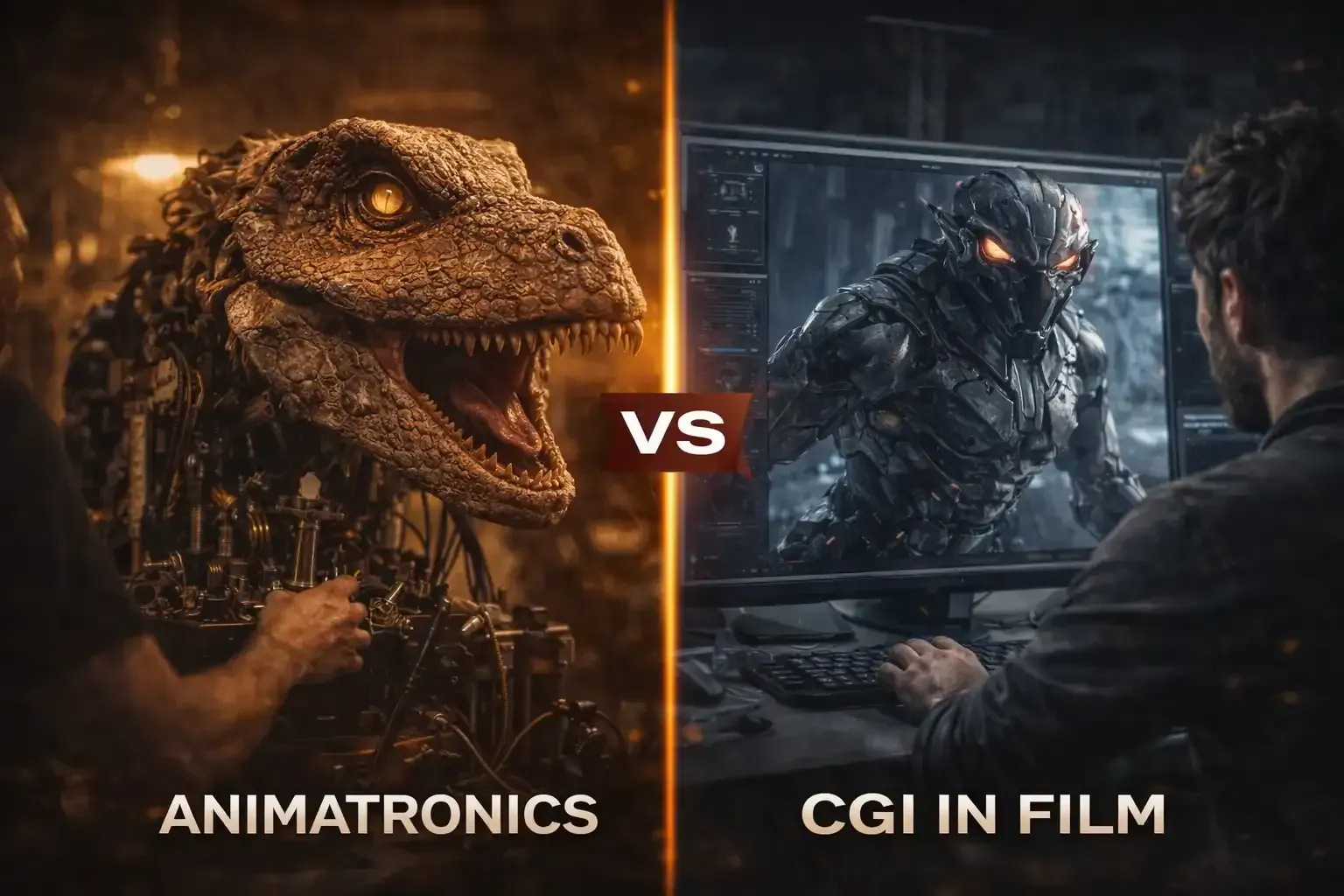
A split-screen comparison: on the left, a mechanical dinosaur model being built; on the right, digital CGI on a screen.
By Thea Mulvey April 11, 2026
Compare animatronics vs CGI in film. Discover which delivers better realism, performance and results on camera for modern productions.
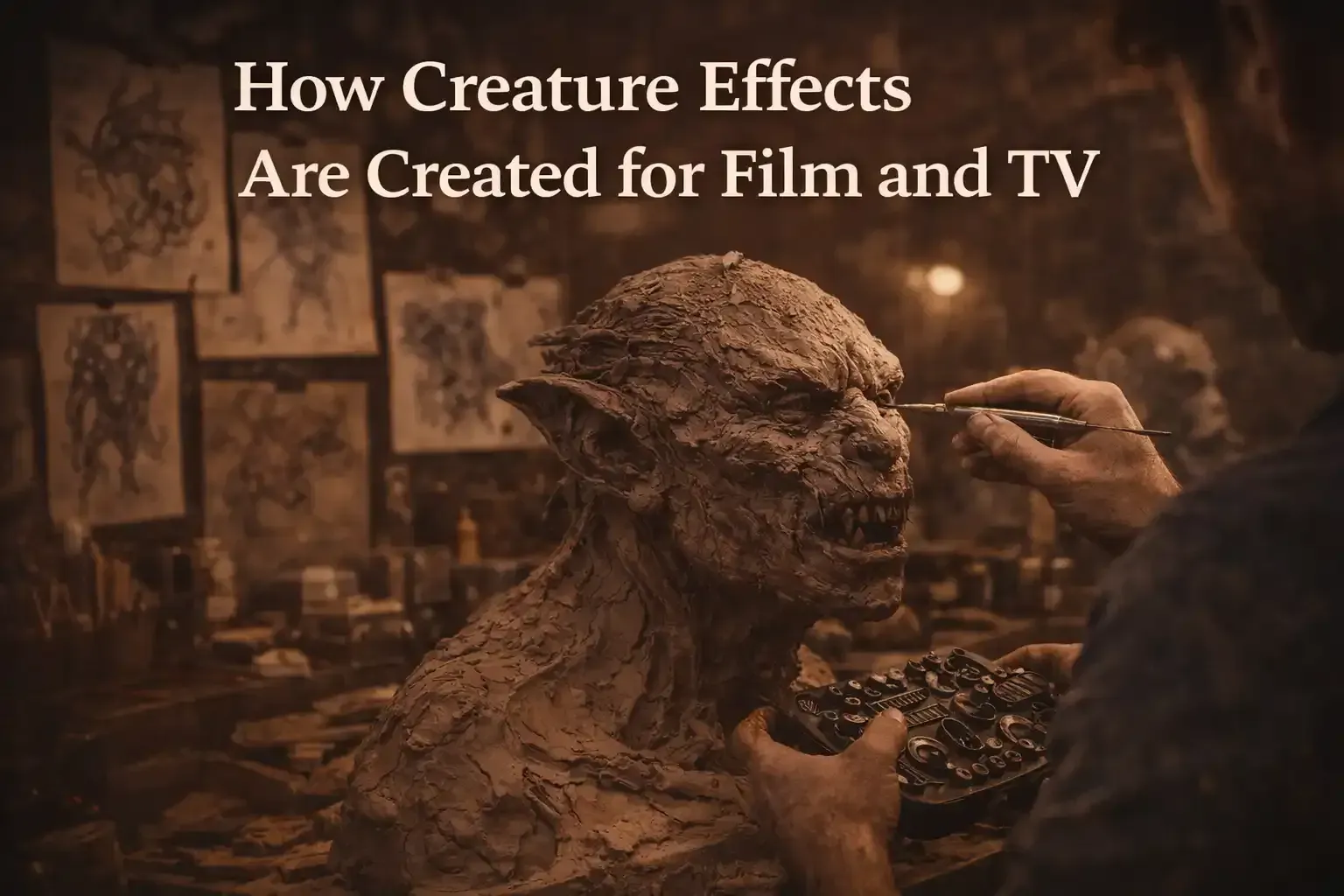
A sculptor works on a detailed clay bust of a creature in a studio filled with character design sketches.
By Thea Mulvey April 4, 2026
Learn how creature effects are created for film and TV. From concept design to on-set performance, discover the full process behind realistic creatures.
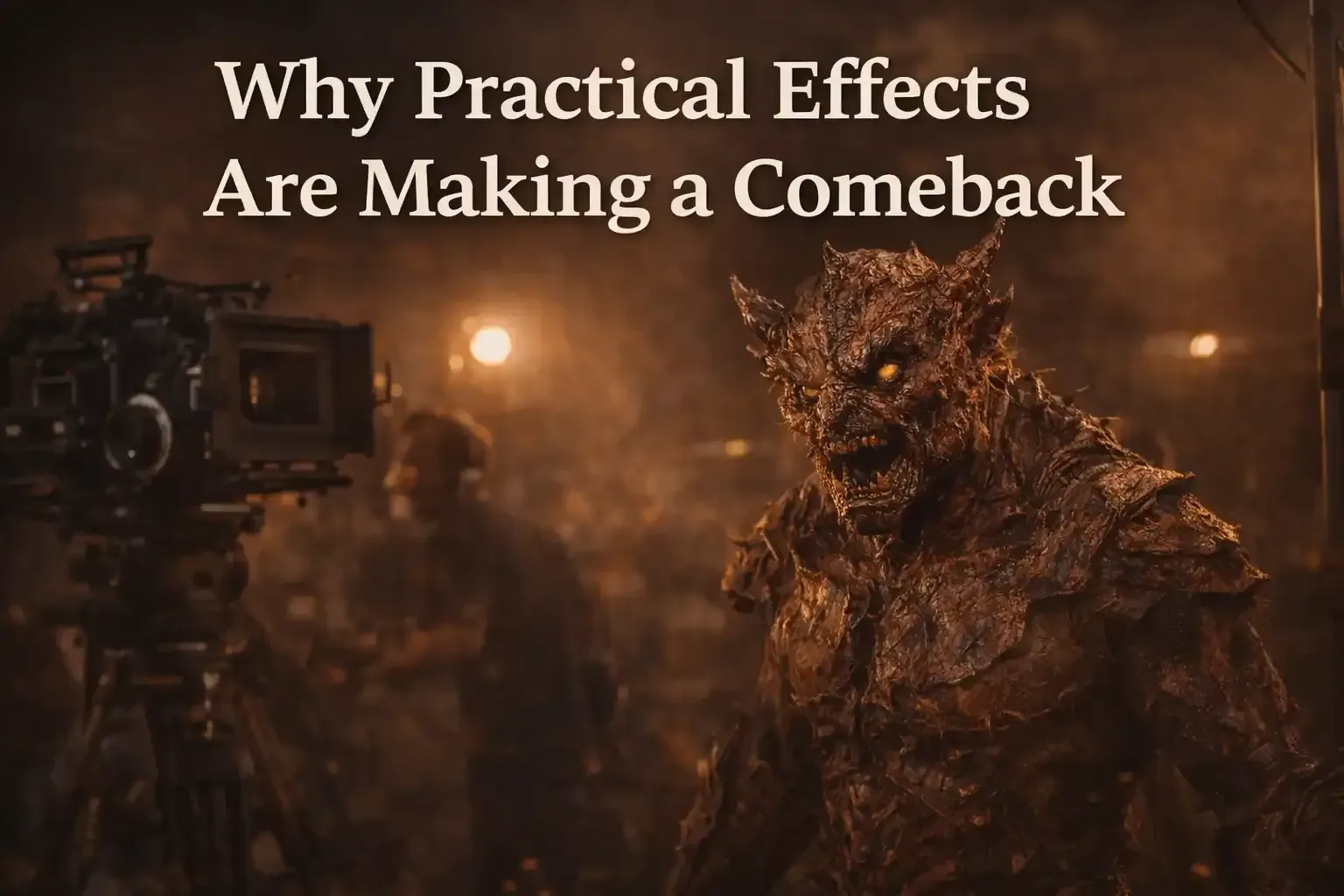
A film set with a crew member using a camera to film a textured, menacing monster, with the text
By Thea Mulvey March 27, 2026
Discover why practical effects are making a comeback in film. Explore realism, audience demand and how productions combine practical effects with CGI.
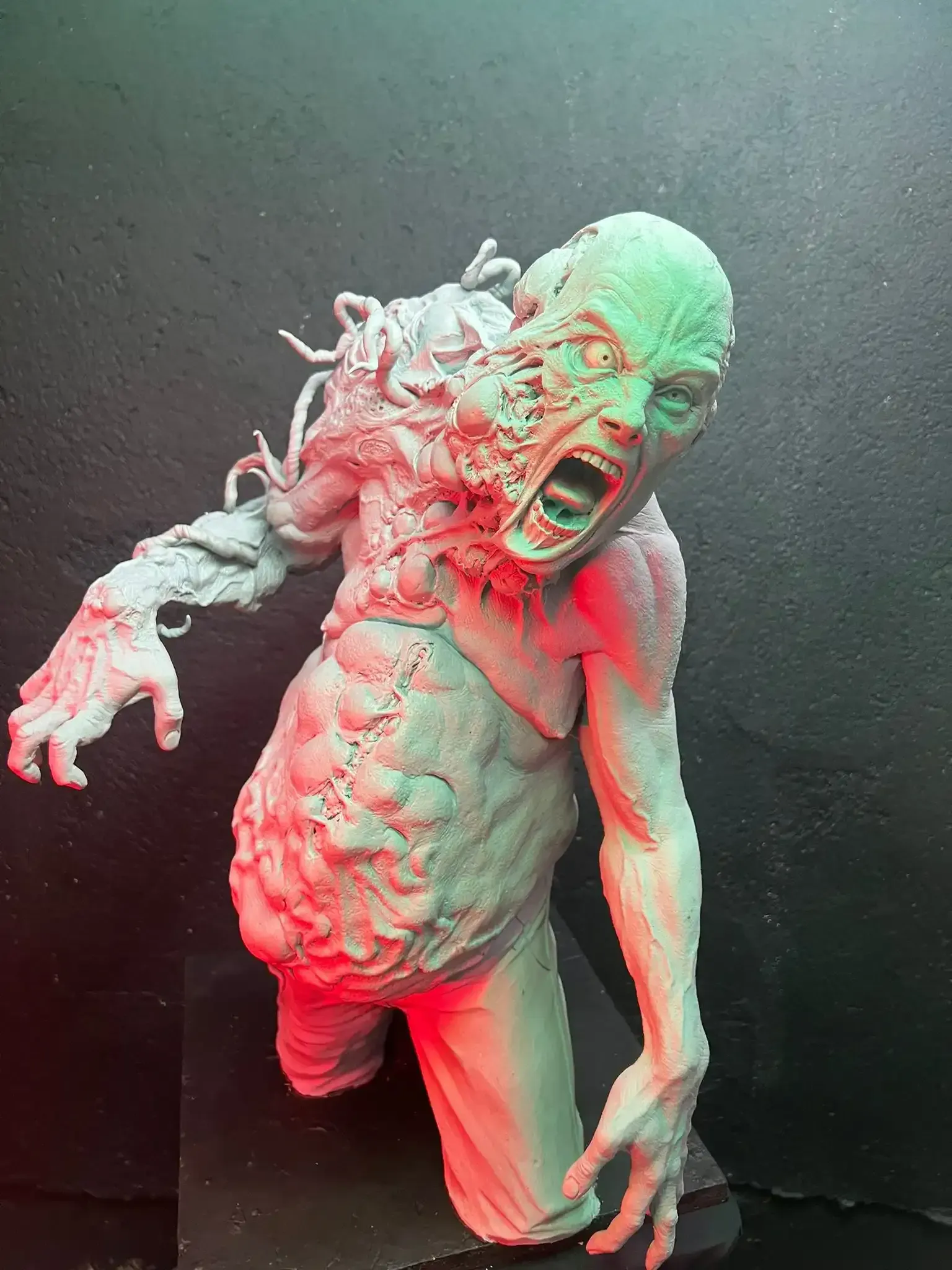
Mutated humanoid figure with gaping mouth, distorted features, and reddish-green lighting.
By Thea Mulvey March 1, 2026
Inside Professional Creature Effects for Film and Television Production
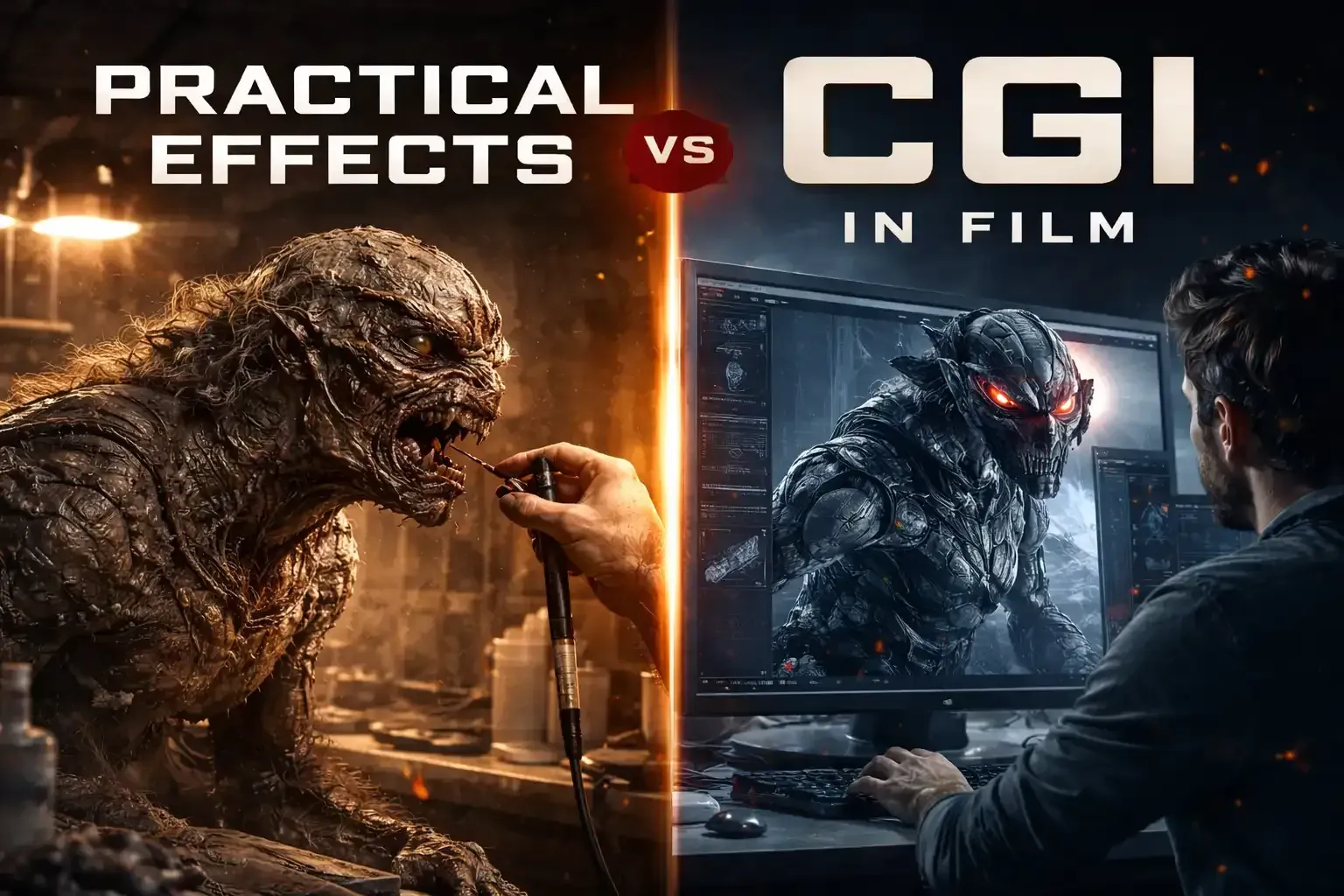
Comparison of practical effects vs. CGI in film: a creature being built vs. a digital artist working on a CGI character.
February 21, 2026
Exploring practical effects vs CGI in film production. Discover when prosthetics, creature builds and animatronics outperform digital effects.